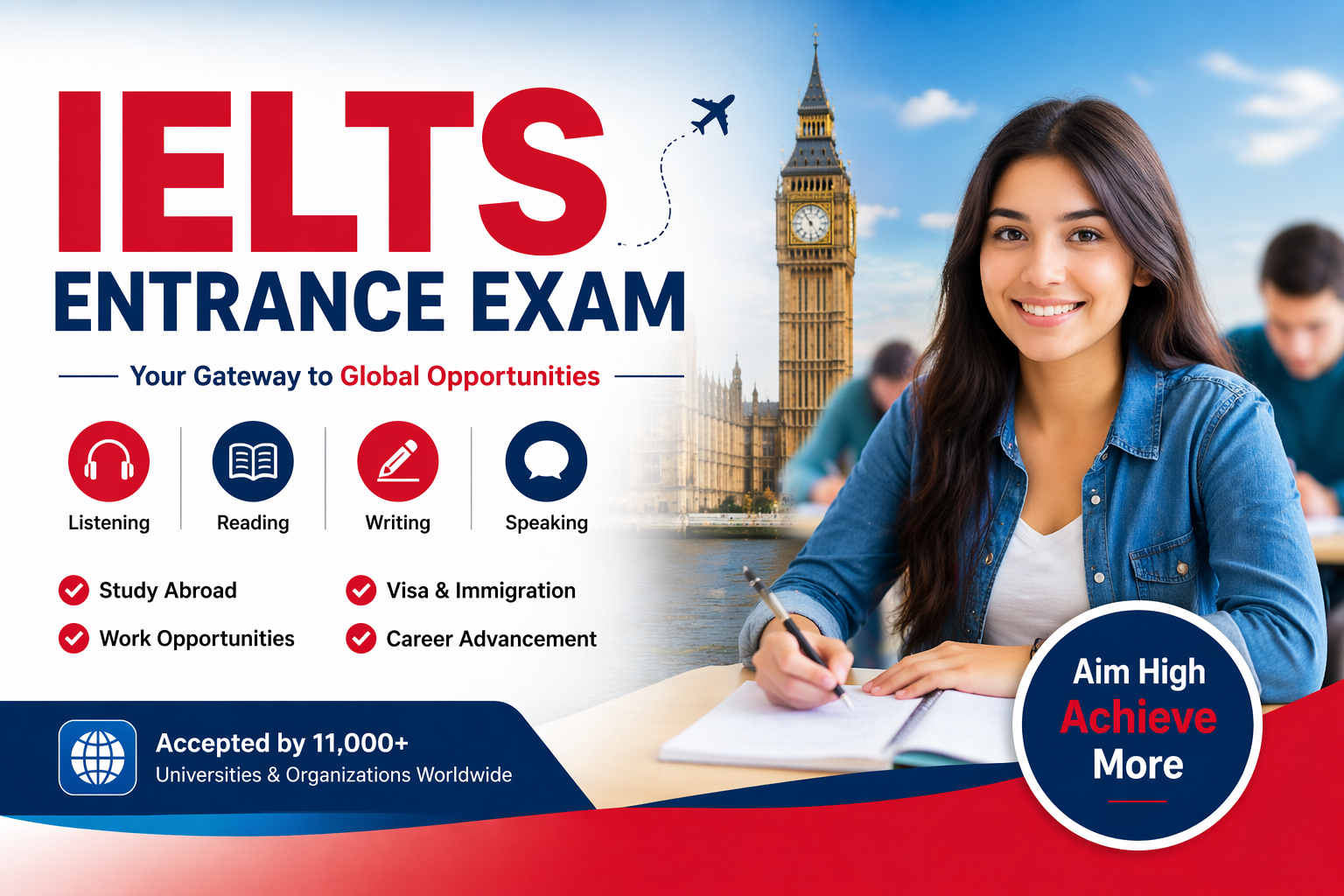
IELTS – Complete Guide for Study, Work, and Immigration
Introduction to IELTS
The IELTS (International English Language Testing System) is one of the most widely recognized English language proficiency tests in the world. It is accepted by universities, employers, and immigration authorities in countries such as the UK, Canada, Australia, and New Zealand. IELTS is designed to assess the English language skills of non-native speakers who wish to study, work, or migrate abroad. With millions of test-takers every year, IELTS has become a trusted standard for evaluating English communication abilities in real-life situations.
What is IELTS?
IELTS is a standardized test that measures a candidate’s ability to communicate in English across four key areas: Listening, Reading, Writing, and Speaking. The test is jointly managed by organizations like the British Council, IDP, and Cambridge Assessment English. IELTS is available in two main formats: Academic and General Training. The Academic version is suitable for students applying to universities, while the General Training version is designed for individuals seeking work experience or immigration opportunities.
Types of IELTS
There are two main types of IELTS tests:
- IELTS Academic – For students applying to higher education institutions or professional registration.
- IELTS General Training – For individuals planning to migrate or gain work experience in English-speaking countries.
Choosing the right type of IELTS is essential based on your goals, as each version focuses on different language skills and contexts.
IELTS Test Format
The IELTS exam is divided into four sections, each designed to evaluate specific language skills:
- Listening (30 minutes) – Candidates listen to recordings and answer questions based on them.
- Reading (60 minutes) – Includes passages with questions to test comprehension skills.
- Writing (60 minutes) – Consists of two tasks that assess writing ability.
- Speaking (11–14 minutes) – A face-to-face interview with an examiner.
The total test duration is approximately 2 hours and 45 minutes. The IELTS test format is designed to reflect real-life communication scenarios.
IELTS Scoring System
IELTS uses a band score system ranging from 0 to 9. Each section receives an individual band score, and the overall band score is calculated as the average of these four sections. For example, a score of 7 indicates a good level of English proficiency, while a score of 8 or higher reflects very strong language skills.
Different institutions and immigration programs have varying IELTS score requirements. For instance, universities may require a minimum score of 6.5 or 7, while immigration programs like Canada PR may require specific scores in each section.
Importance of IELTS for Immigration
IELTS plays a crucial role in immigration processes for countries like Canada, Australia, and the UK. It is often a mandatory requirement for visa applications under skilled migration programs. A higher IELTS score can significantly improve your chances of selection, especially in points-based systems like Express Entry in Canada.
For example, achieving a higher band score in IELTS can increase your Comprehensive Ranking System (CRS) score, making it easier to receive an invitation to apply for permanent residency. This makes IELTS an essential step for anyone planning to migrate abroad.
IELTS Preparation Tips
Preparing for IELTS requires a strategic approach and consistent practice. Here are some effective tips:
- Understand the test format and question types
- Practice regularly using official IELTS materials
- Improve vocabulary and grammar skills
- Take mock tests to assess your performance
- Focus on time management during the exam
Joining coaching classes or using online resources can also help improve your IELTS preparation. Consistency and dedication are key to achieving a high score.
Common Mistakes to Avoid in IELTS
Many candidates make common mistakes while preparing for IELTS. These include poor time management, lack of practice, and misunderstanding the question format. Some test-takers also neglect certain sections, such as writing or speaking, which can lower their overall score.
Another mistake is memorizing answers instead of developing language skills. IELTS is designed to test real communication ability, so it is important to focus on improving overall English proficiency rather than relying on shortcuts.
IELTS Registration Process
Registering for IELTS is a simple process. Candidates can book their test online through official websites such as the British Council or IDP. During registration, applicants must choose the test type, location, and date.
Candidates are required to provide valid identification, such as a passport, and pay the test fee. It is advisable to book the test well in advance to secure the desired date and location.
IELTS Validity and Retake
IELTS scores are valid for two years from the test date. If a candidate is not satisfied with their score, they can retake the test as many times as they wish. There is no limit on the number of attempts, but proper preparation is recommended before retaking the exam.
Retaking IELTS can help improve scores and increase chances of success in academic or immigration applications.
Why Choose IELTS?
IELTS is one of the most trusted and widely accepted English language tests globally. It is recognized by over 11,000 organizations worldwide, including universities, employers, and immigration authorities. The test is designed to be fair, accurate, and reflective of real-world language use.
Choosing IELTS provides flexibility, as it is available in both paper-based and computer-based formats. It also offers multiple test dates and locations, making it convenient for candidates.
Conclusion
The IELTS exam is a crucial step for individuals planning to study, work, or migrate to English-speaking countries. With its comprehensive assessment of language skills, global recognition, and importance in immigration processes, IELTS remains one of the most valuable tests for non-native English speakers. By understanding the test format, preparing effectively, and avoiding common mistakes, candidates can achieve their desired scores and move closer to their international goals.